
TB 26-07 Aluminum Alloy 2219 Material Guidance
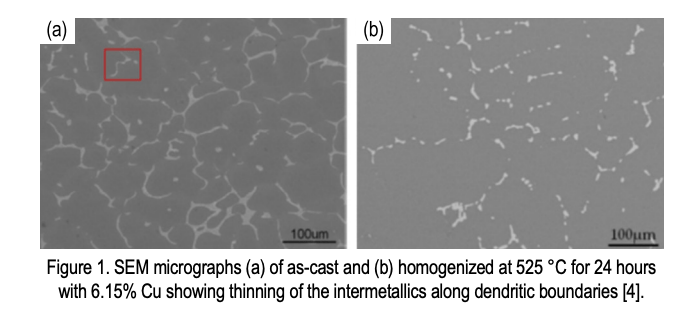
For more information, contact Donald S. Parker, Kennedy Space Center, [email protected] Download the PDF version Improper casting and forging processes in the manufacture of aluminum alloy 2219 can lead to microstructural defects that result in a sub-optimal response to anodic surface treatme
Aluminum Alloy 2219 Manufacturing Guidance
-
Material Risk: Improper casting/forging of Aluminum 2219 causes microstructural defects and increased corrosion susceptibility.
-
Technical Recommendation: NASA recommends a homogenizing step followed by multidirectional deformation post-casting, particularly for large castings.
-
Operational Standard: Homogenization using 535 °C for 10 hours promotes copper diffusion and reduces element segregation.
-
Process Limitation: Unrecoverable discontinuities like interdendritic segregation cannot be remedied by subsequent thermo-mechanical processing.
Aerospace Manufacturing & Quality Control
Must refine casting parameters and homogenization protocols to avoid compromised ductility and strength.
Should utilize XRD and DSC tools to verify homogenization efficacy in large-scale aluminum structures.
Policy Radar: Technical Standards
- Technical Bulletin document expiration or revision post-09/24/26
Material Engineering FAQs
Why is homogenization essential for Al 2219? ▾
It drives copper atoms out of interdendritic zones into the aluminum matrix to ensure uniform material properties.
Can post-casting processing fix all defects? ▾
No, defects like interdendritic segregation and clustered copper intermetallics are unrecoverable if present in the raw ingot.
This dispatch has been curated by Press Glob under international press wire fair-use reporting standards. Access the original reporting directly below.